
The Multiple Applications and Development of Relays in Modern Electronic Systems
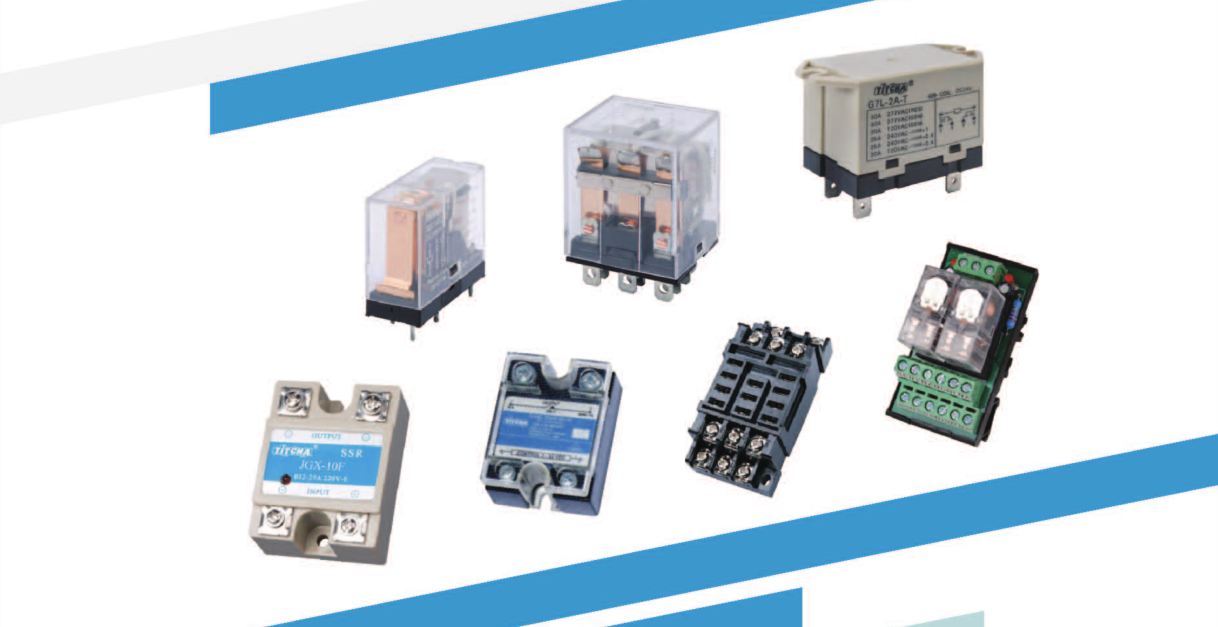
### Comprehensive Introduction to Relays
#### 1. Introduction
1. **Definition of Relays**
A relay is an electronic control device with a control system (input circuit) and a controlled system (output circuit). It responds to changes in the input signal to automatically switch the output circuit. Relays play a critical role in electrical and electronic fields, widely used in automation control systems, protective devices, and communication equipment. They operate by converting a small electrical signal into a larger current, ensuring system stability and safety.
2. **Purpose of the Article**
This article aims to provide a comprehensive introduction to the working principles, types, applications, and selection guidelines of relays. By exploring these aspects in depth, readers can better understand the function and importance of relays, and gain practical guidance for their applications.
#### 2. Working Principle of Relays
1. **Basic Principle**
The working principle of an electromagnetic relay is based on electromagnetic effects. When current flows through the relay coil, the resulting magnetic field attracts the iron core, driving the contact switch state. Signal relays achieve switching actions by receiving and processing external signals, which can be changes in voltage, current, or other electrical parameters.
2. **Internal Structure**
The internal structure of a relay mainly includes a coil, contacts, and a spring. When the coil is energized, it generates a magnetic field that attracts the armature, causing the contacts to open or close. Contacts are classified as normally open (NO) and normally closed (NC), corresponding to the relay's off and on states when de-energized and energized, respectively. The spring returns the contacts to their initial state when the coil is de-energized, ensuring system reliability.
#### 3. Types of Relays
1. **Classification by Working Principle**
- Electromagnetic relays are driven by an electromagnetic coil and are widely used.
- Solid-state relays use semiconductor devices for contactless switching, offering fast response and long life.
- Thermal relays control contacts through the thermal expansion and contraction of bimetallic strips, commonly used for overload protection.
2. **Classification by Use**
- Power relays control high-power electrical equipment.
- Signal relays handle small current signals.
- Time relays perform delayed operations within a set time.
- Automotive relays are designed for vehicles, controlling systems like lights and engines.
3. **Other Classifications**
Relays can also be classified by pole count (single-pole, double-pole) and contact form (normally open, normally closed), providing flexible options to meet various application needs.
#### 4. Applications of Relays
1. **Industrial Control**
In automation equipment, relays control various actions such as starting, stopping, and switching to ensure efficient operation. In protection circuits, relays detect abnormalities and disconnect circuits to prevent equipment damage. For example, WENZHOU GIANT ELECTRICAL APPLIANCES CO., LTD's high-performance relays excel in industrial automation control and are favored by many companies.
2. **Home Appliances**
Relays control key components like compressors and fans in household appliances such as air conditioners and refrigerators, ensuring proper operation and energy management. WENZHOU GIANT ELECTRICAL APPLIANCES CO., LTD's household relay products are praised for their high reliability and long lifespan.
3. **Communication Systems**
In communication equipment, relays are used for signal switching and protection, ensuring system stability and reliability, and preventing signal interference and damage. WENZHOU GIANT ELECTRICAL APPLIANCES CO., LTD's signal relays are widely used in communication base stations, ensuring smooth network operation.
4. **Automotive Electronics**
In automotive control systems, relays manage lights, wipers, power windows, and other functions, enhancing driving convenience and safety. WENZHOU GIANT ELECTRICAL APPLIANCES CO., LTD's automotive relay products are known for their high performance and durability, making them a partner for many automotive manufacturers.
#### 5. Selection and Use of Relays
1. **Selection Guide**
When selecting a relay, consider the load type, operating environment, and electrical parameters. For high-current loads, choose power relays; for harsh environments, select relays with a high protection rating. WENZHOU GIANT ELECTRICAL APPLIANCES CO., LTD offers various types of relays to meet diverse user needs.
2. **Usage Precautions**
When using relays, ensure proper wiring and secure electrical connections. Adhere to the relay's rated values to avoid overloading. Regular maintenance and timely replacement of aged components are necessary to ensure system safety and reliability.
#### 6. Trends in Relay Development
1. **Technological Advancements**
The use of new materials has improved relay performance, such as high-conductivity and high-temperature resistant materials. The development of intelligent relays with self-diagnostic and communication functions has further enhanced automation control levels.
2. **Market Demand**
With the growth of industrial automation, the demand for relays continues to rise. Additionally, the push for green and sustainable solutions has made low-energy, high-efficiency relays a market mainstream.
#### 7. Conclusion
1. **Summary**
As a crucial control device in electrical and electronic fields, relays have a broad application prospect. With continuous technological progress and changing market demands, relays will continue to play a vital role in various fields, contributing to industrial automation and environmental sustainability. The ongoing innovation from companies like WENZHOU GIANT ELECTRICAL APPLIANCES CO., LTD will drive the relay industry to new heights.
The widespread use of relays.
